

The Kurdish Lawyers Union is closely monitoring the information...
Legal Brief on Kurdish Forces Detainees and Violations Committed Against Them
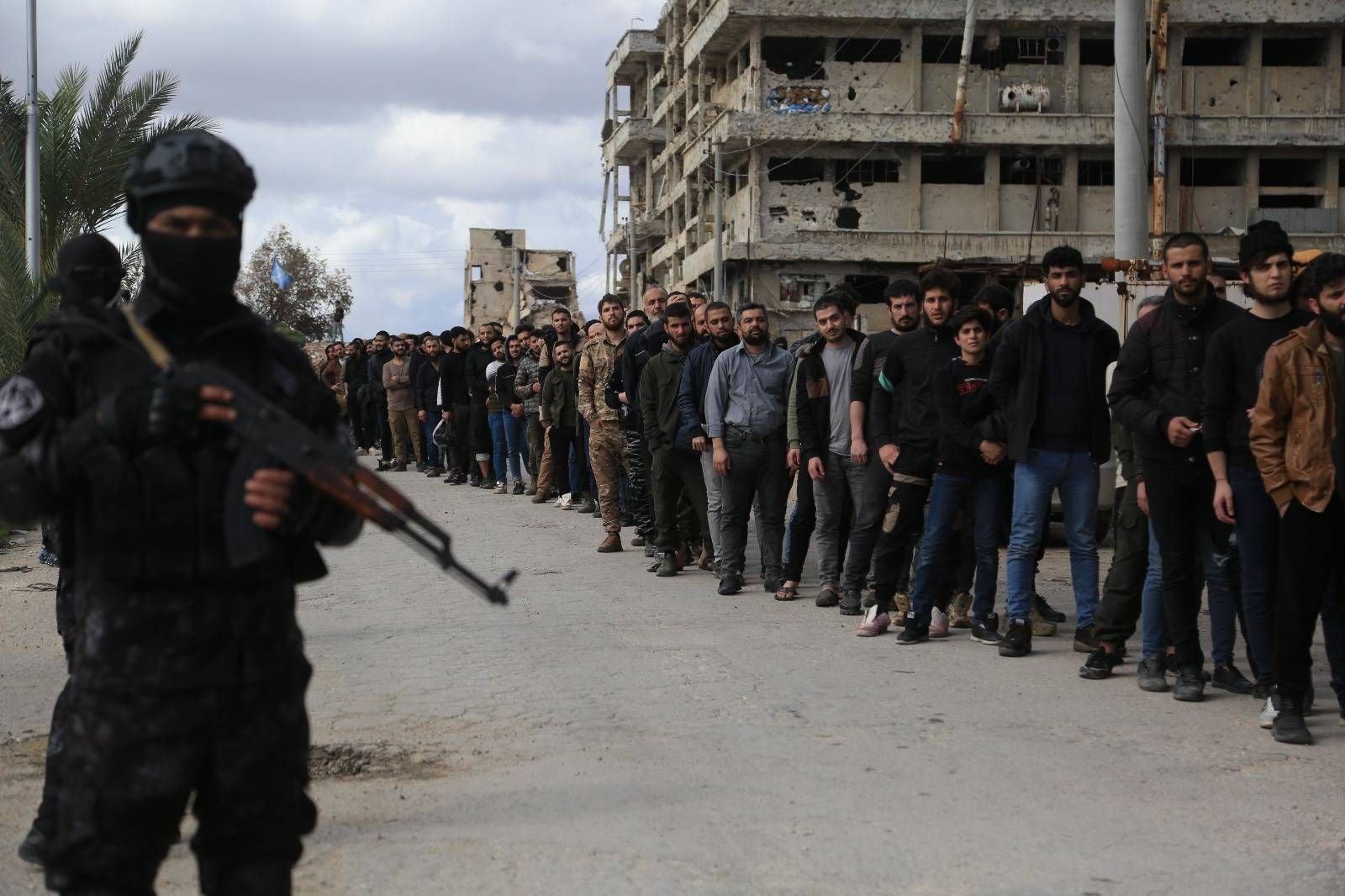
Injustice is not merely a practice imposed by the powerful upon the vulnerable; it is a profound wound in the conscience of humanity as a whole. Despite the growing prominence of human rights and justice discourse worldwide, thousands of victims continue to endure a silent reality of abuse and oppression, deprived of the ability to make their voices heard or obtain even the minimum standards of protection and redress.
The issue of detainees and prisoners remains one of the most urgent humanitarian concerns. Nevertheless, it has not yet received sufficient attention or documentation, despite the grave violations suffered by detainees, which undermine human dignity and threaten their rights to life, physical integrity, and mental well-being.
The Kurdish Lawyers Union has received a number of photographs and video recordings documenting serious violations committed against detainees, including acts of torture, extrajudicial killings, mutilation of corpses, dragging of bodies, and decapitation of male and female fighters. The Union has also obtained official documents relating to unidentified bodies bearing registration numbers approaching approximately 3,500 corpses, with indications suggesting that the actual number may be significantly higher. These records pertain to the first and second months of the current year.
Documentation of Detainee Testimonies
Between 10 May 2026 and 24 May 2026, the Kurdish Lawyers Union conducted field interviews with several detainees who had recently been released. Their testimonies were documented, and the violations they experienced during detention were recorded.
To safeguard their security and personal safety, the Union has withheld their identities and replaced their names with pseudonymous initials:
- Detainee (IM), 22 years old.
- Detainee (DM), 24 years old.
- Detainee (MX), 22 years old.
The testimonies focused on the humanitarian conditions and abuses they endured during their detention in facilities operated by the Syrian General Security Service, following their capture after the withdrawal agreement concluded between the Syrian Democratic Forces (SDF) and the Syrian General Security in the Deir Hafer area on 17 January 2026.
Circumstances of Capture and Arrest
The accounts provided by the three detainees were largely consistent, as they had all been serving within the ranks of the Syrian Democratic Forces and were captured in the same area under similar circumstances.
According to their testimonies, on 16 January 2026, while deployed in the Deir Hafer region, they received orders to withdraw. However, all communications were severed during the withdrawal operation, causing confusion and disorder due to the absence of coordination among military commanders. While some commanders instructed personnel to defend themselves, others ordered an immediate withdrawal.
The detainees stated that the withdrawal had been scheduled for 7:00 p.m.; however, delays in assembling personnel dispersed throughout nearby villages resulted in their remaining in the area until approximately 10:00 p.m.
During this period, forces of the army, General Security, and Military Police had entered the area and imposed a siege upon them, enjoying a significant numerical advantage.
The detainees further reported that clashes erupted in the Maskanah area and that tribal armed groups participated alongside government forces. According to their accounts, attacks targeted not only combatants but also Kurdish civilian homes and families.
They stated that fighters returned to a previous assembly point out of fear that engaging in combat would lead to their deaths and leave their bodies abandoned in the streets without protection or documentation.
Subsequently, an agreement was reportedly reached between their commanders and the Governor of Aleppo, whereby weapons would be surrendered in exchange for guarantees of safe passage and transfer via the Tishreen Dam route, which had been designated as a secure corridor for their handover to their comrades.
However, according to the testimonies, the agreement was not honored. Instead of being transported to the agreed destination, they were taken to the city of Aleppo and detained in the basement facility of the Syrian Ministry of Interior.
Conditions of Detention
The detainees reported that they were subjected to mass detention in overcrowded buses, each carrying approximately 150 individuals, including fighters, civilians, and employees affiliated with the Autonomous Administration.
Upon boarding, all personal belongings and mobile phones were confiscated, and they were allowed to retain only the clothing they were wearing.
The detainees described the detention facility as consisting of three main sections (dormitories):
- Section One: Approximately 25 × 10 meters, housing around 215 detainees.
- Section Two: Approximately 15 × 5 meters, housing around 150 detainees.
- Section Three: Designated for women, approximately 7 × 5 meters, housing around 60 female fighters.
They further reported the presence of:
- Approximately 15 detainees over the age of 60.
- Approximately 20 minors between the ages of 15 and 18.
The testimonies indicate that detention conditions were harsh and inhumane. There was insufficient space for sleeping, forcing detainees to take turns standing so that others could rest.
The cells reportedly lacked adequate ventilation, lighting, bedding, and blankets. Detainees were compelled to sleep on cold floors amid suffocating odors caused by mold, sweat, and unsanitary conditions.
The detainees further reported widespread infestations of insects, lice, and cockroaches, coupled with an almost complete absence of hygiene and medical care. They stated that they were unable to bathe throughout a detention period lasting nearly three months.
Food, according to the testimonies, consisted primarily of stale bread and cloudy water with an unusual taste, provided in insufficient quantities.
Psychological and Physical Torture
The detainees documented multiple forms of psychological and physical torture.
Psychologically, they described complete isolation from the outside world, including the denial of contact with family members and the inability to obtain information regarding their fate. They further reported persistent insults, verbal abuse, and threats directed against them, their families, and their commanders.
They also stated that elderly detainees and minors were subjected to torture in front of other detainees, causing severe psychological distress within the detention facility.
Physical torture reportedly included beatings with sticks and rigid plastic hoses, punching and kicking during interrogations, electric shocks, solitary confinement, and the deprivation of food and water for certain detainees.
According to their testimonies, some of the most severe abuses were allegedly committed by members of the armed factions known as the “Amshat,” “Hamzat,” and “Sultan Murad” groups, who had joined the General Security Service. These individuals reportedly targeted wounded detainees by striking them on their injuries.
The detainees further stated that they resorted to hunger strikes and organized protests within the cells in an attempt to draw the attention of prison authorities to their conditions. These actions reportedly resulted in the transfer of some personnel implicated in torture and led to a relative improvement in treatment, particularly following interventions by humanitarian organizations.
They also reported receiving limited humanitarian assistance, medicines, and blankets during the month of Ramadan through entities displaying United Nations insignia.
Health and Psychological Consequences Following Release
The former detainees interviewed confirmed that they continue to suffer from serious physical and psychological consequences following their release, including:
- Dental damage and oral health problems.
- Joint and bone pain.
- Digestive disorders.
- Sleep disturbances.
- Depression, anxiety, and episodes of anger.
- Breathing difficulties and ongoing psychological trauma.
They stated that they are currently receiving medical treatment and healthcare services.
Conclusion
The informed and documented testimonies obtained by the Kurdish Lawyers Union reveal serious violations affecting fundamental principles of international humanitarian law and international human rights law. These allegations warrant an independent, impartial, and transparent investigation to ensure accountability for those responsible and to prevent the recurrence of such violations.
The Union reaffirms its commitment to documenting these violations and conveying the voices of victims to the relevant international bodies and organizations, in fulfillment of its humanitarian and legal responsibilities.
Kurdish Lawyers Union
Monitoring Documentation and Archiving Committee
Bonn, Germany
29 May 2026
Most recent
The elderly Kurdish civilian Adel Abdul Hanan Naasan (66...
Injustice is not merely a practice imposed by the...